
Agent skills are closer to operating manuals than plug-ins. They tell an agent how to behave when a particular job appears: what to inspect first, which steps not to skip, and when to stop and ask a person. That distinction matters. A long tool list can make an agent look capable, while one good instruction can prevent it from making the same expensive mistake twice.
I wanted to see which collections people were actually keeping around, so I compared GitHub stars on August 12, 2026. This is not a download chart and it is not a quality score. GitHub does not publish clean installation numbers for these repositories, and some entries contain a handful of files while others package an entire working environment. Stars are useful here only as a trail of attention.
1. obra/superpowers: make the agent pause before it codes
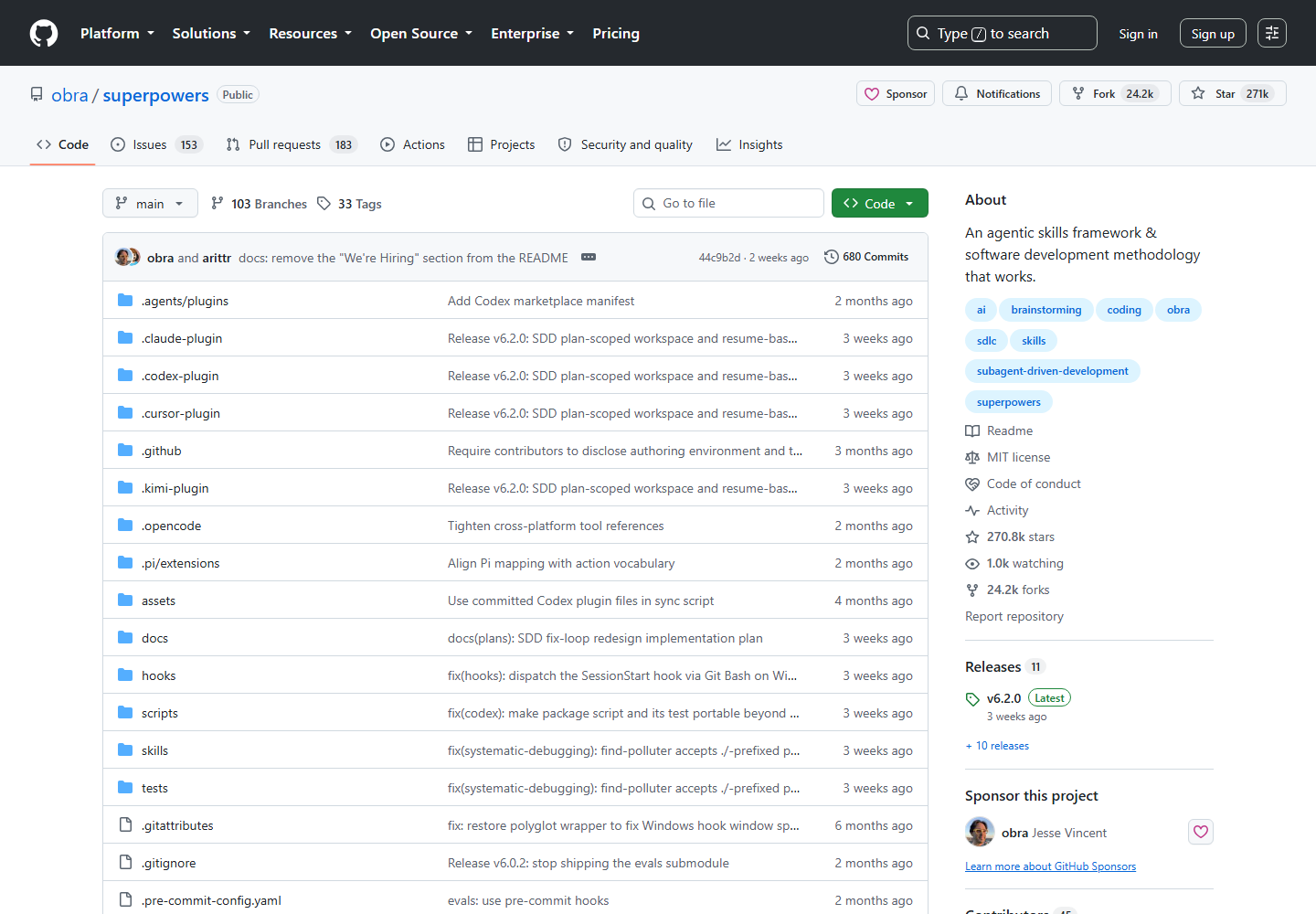
Superpowers is the most opinionated entry in the list. Once loaded, it pushes the agent through discovery, design, task breakdown, implementation, testing, and review. The important part is not the number of skills. A bootstrap rule selects the relevant skill and treats it as mandatory when the task matches.
That can be helpful when an agent routinely jumps from a vague request straight into code. It can also be heavy. The repository injects a substantial process into every matching session, and its own history includes complaints about context use. I would use it for work where an unexamined assumption is expensive, not for a two-line copy change.
2. affaan-m/ECC: a complete operating environment, with the bill attached
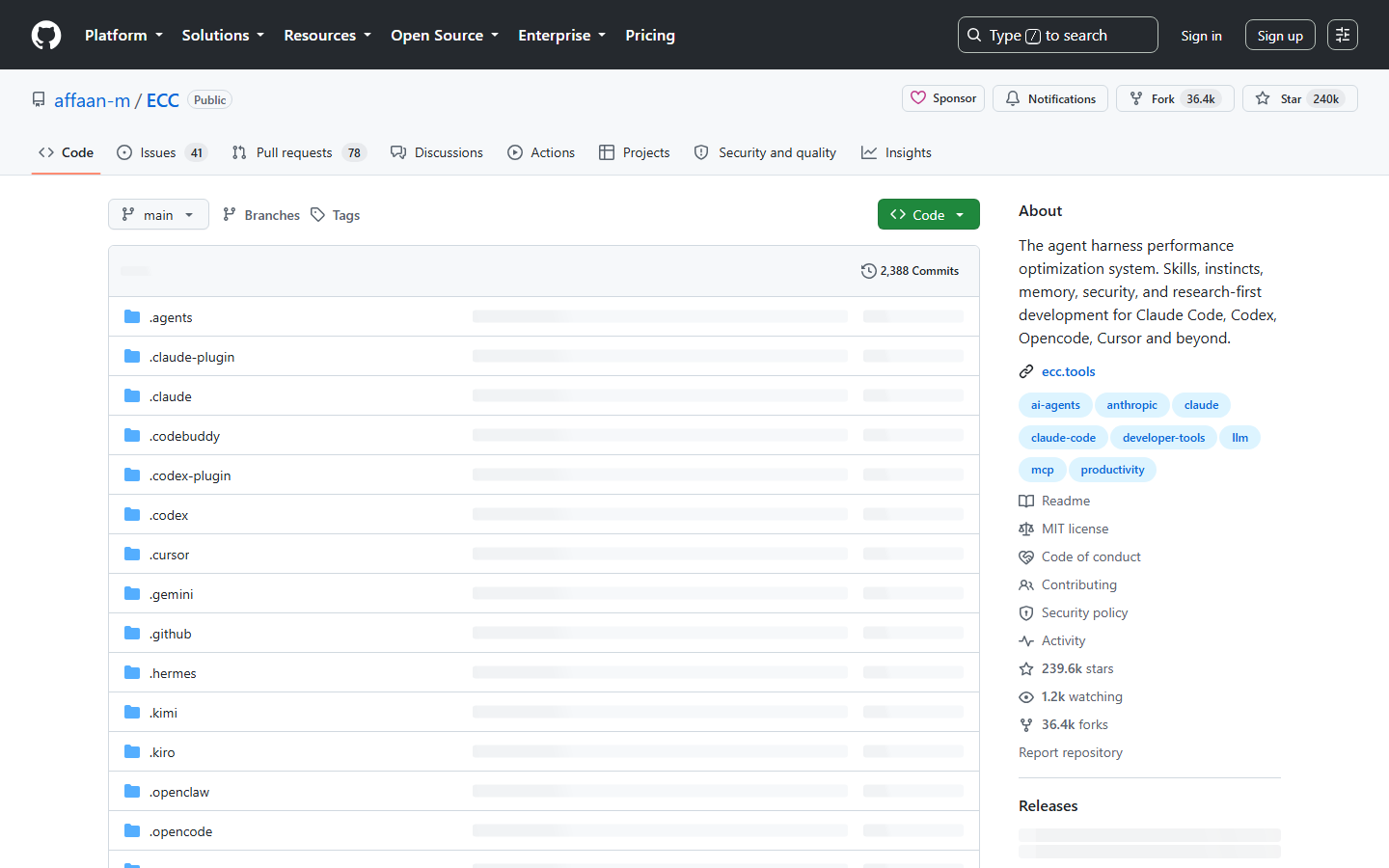
Everything Claude Code, or ECC, is less a skill pack than a distribution. It bundles agents, commands, rules, hooks, and skills for planning, coding, review, testing, research, and security. The attraction is obvious: a team can install a ready-made workflow instead of assembling one from scratch.
The cost is permanent context. The repository contains hundreds of instruction files, and installing the full set means the agent must repeatedly decide which rules apply. That is useful only when the team agrees with the workflow. I would start with one or two commands, inspect the prompt footprint, and add more only when a real gap appears.
3. mattpocock/skills: ask better questions before producing an answer
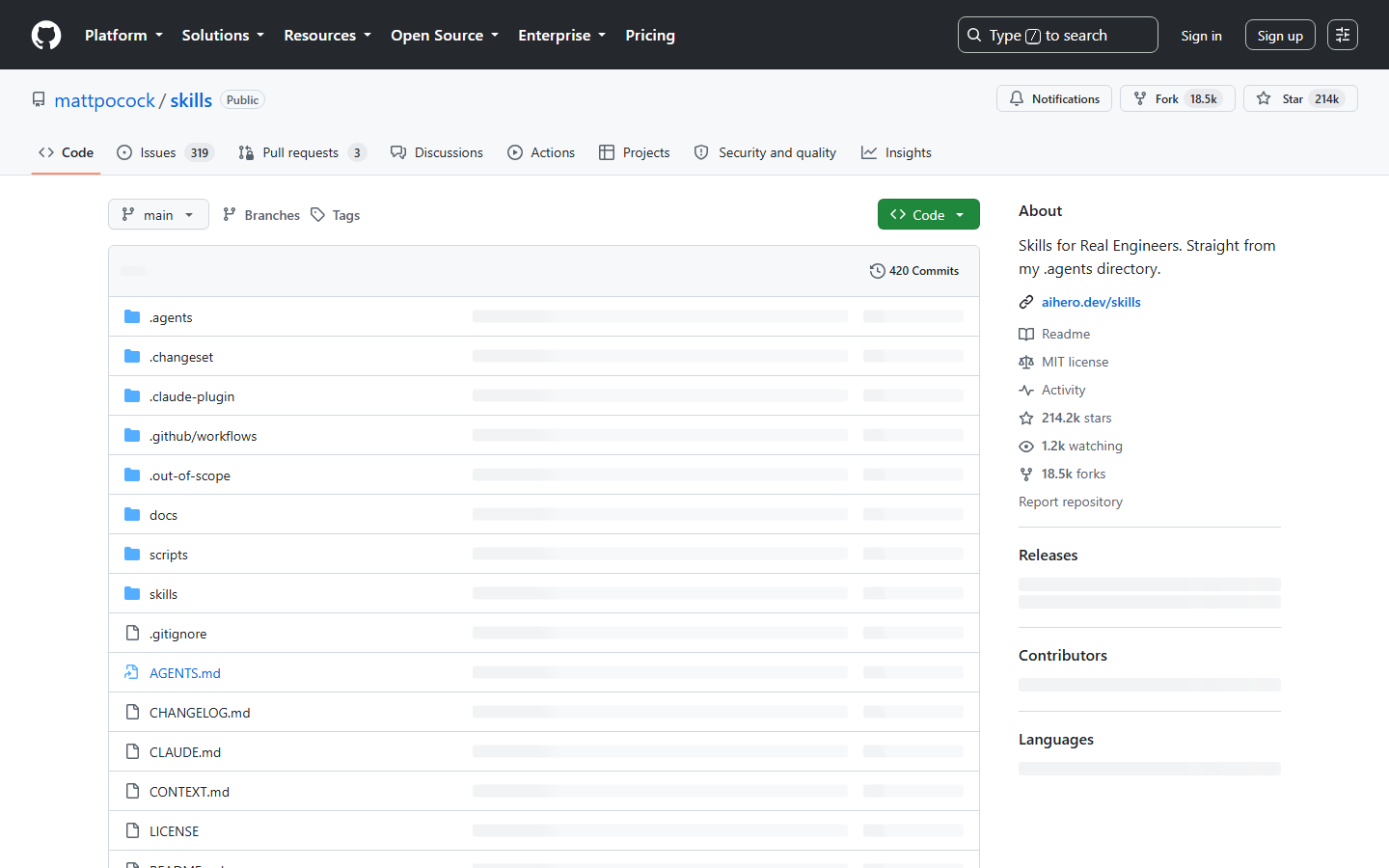
Matt Pocock’s collection is smaller and easier to read. Its best-known pattern, grill-me, is an interview loop: the agent asks one question at a time, records the decision, and keeps probing until the plan is specific enough to act on.
This is valuable because it changes behavior rather than supplying a prettier output template. It also has a practical limitation: the skill file and the command that invokes it are separate. Installing one without understanding the other can leave a user with instructions that never run. Read the entry point before copying the folder.
4. multica-ai/andrej-karpathy-skills: a compact set of borrowed principles
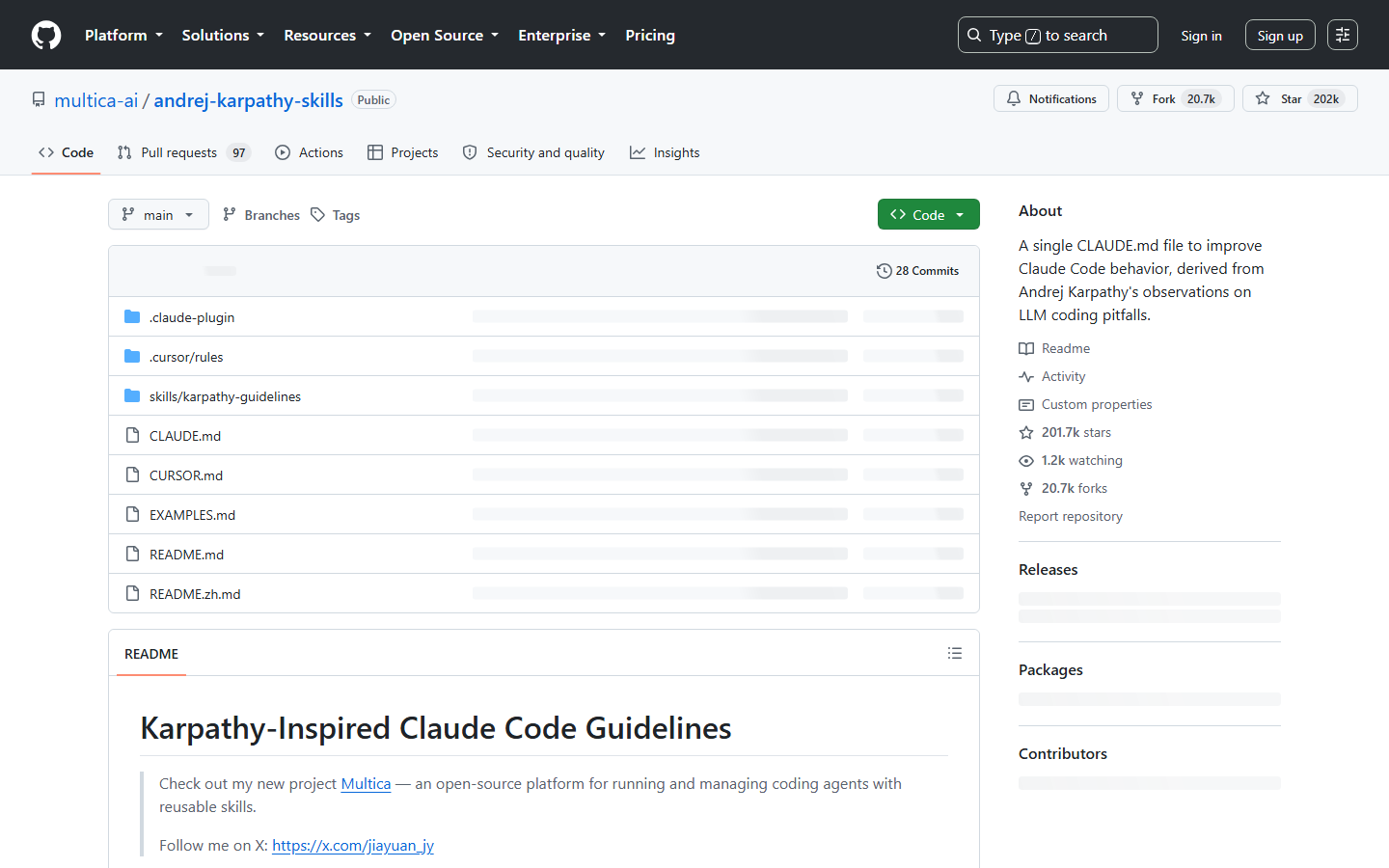
This repository condenses familiar coding advice associated with Andrej Karpathy: think before coding, keep changes simple, fix root causes, and make the result verifiable. The file is short, and that is part of its appeal. It does not try to build a second framework around the agent.
The name needs a caveat. Karpathy is neither the repository owner nor a listed contributor, and the source is a community interpretation of public remarks. Treat it as a useful editorial summary, not an official Karpathy product or endorsement.
5. anthropics/skills: the reference implementation
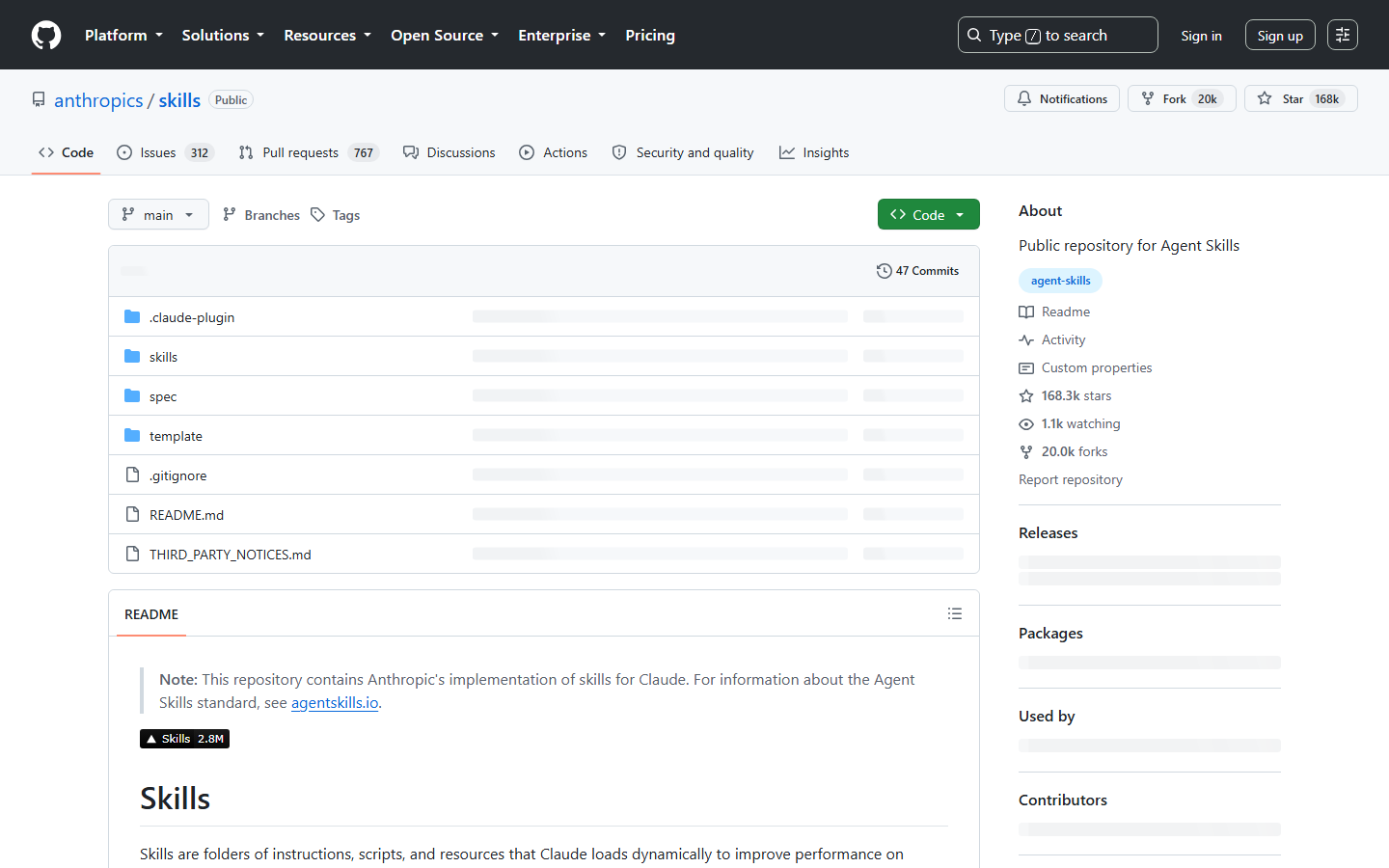
Anthropic’s repository is the official reference point in this group. It includes production-oriented skills for documents, spreadsheets, slides, PDFs, front-end work, and skill creation. The files are worth reading even if you use another agent because they show how an instruction set can include scripts, examples, and evaluation steps rather than prose alone.
Licensing is the detail I would check before reuse. The repository mixes open components with source-available document skills. “Published on GitHub” does not automatically mean every folder can be redistributed or commercialized under the same terms.
What the ranking actually says
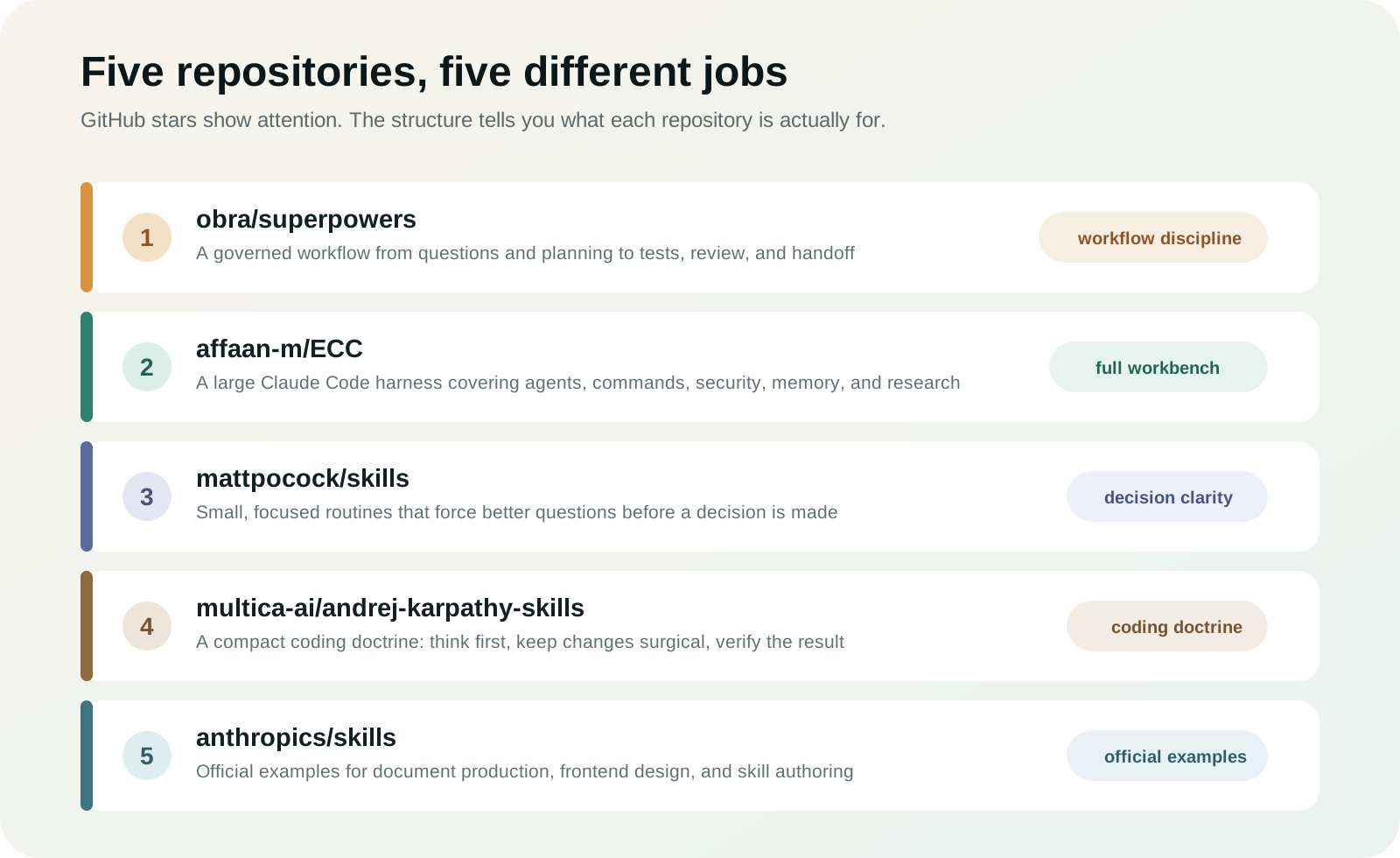
The common thread is not extra capability. It is control. Superpowers refuses to let the agent code before planning. ECC tries to make process repeatable. grill-me delays action until decisions are explicit. The Karpathy-inspired file names recurring failure patterns. Anthropic’s examples attach tests and artifacts to instructions.
That is also why I would not install all five. Overlapping rules create their own failure mode: more tokens, conflicting instructions, and no clear way to tell which skill changed the result. My starting point would be one recurring mistake, one small skill, and one task I can rerun before and after installation. If the review burden falls, keep it. If the agent merely produces longer answers, remove it.
Sources
What I would check before installing any of them
There is also a maintenance question. A skill that looked sensible on installation day can become stale when the agent, model, command set, or repository layout changes. I would keep a short owner note beside every installed pack: why it exists, which task proved its value, and what would justify removing it. That small record is more useful than another long download list because it tells the next operator whether the skill still earns its place.
GitHub stars are useful for finding where attention is moving. They are not evidence that a skill will improve your own work. A repository can become popular because it has a memorable name, broad scope, or an enthusiastic community. None of those things tells you whether the instructions are precise, whether they fit your stack, or whether they create more review work than they remove.
I would start with one skill in a disposable project. Before letting it touch a real repository, I want to see which files it reads, which commands it proposes, what it writes back, and whether it asks before taking an irreversible action. That small trial usually reveals more than another hour spent reading the README. It also makes differences between repositories easier to see: Superpowers imposes a process, ECC supplies a large operating environment, Matt Pocock’s collection sharpens specific working habits, Karpathy’s file offers a compact set of coding judgments, and Anthropic’s repository provides production-oriented document and design workflows.
The comparison should have a baseline. Run the same task once without the skill and once with it. Record how many clarification questions were needed, how many corrections survived the first review, and how long the final verification took. Token use matters too. A long bootstrap prompt may be worthwhile for a multi-day project and wasteful for a fifteen-minute change. A popular package that loads hundreds of instructions into every session can make a capable agent slower and less focused.
Permissions deserve a separate pass. A skill that invokes shell commands, browser automation, cloud services, or third-party APIs should not inherit more access than the task requires. Check whether the repository pins dependencies, whether installation scripts are readable, and whether updates arrive through a channel you can review. For a team, I would keep the selected files in version control rather than installing from a moving branch on every machine.
Licensing is another practical filter. The repository may be public while individual templates, bundled assets, or connected services have different terms. That distinction matters if the output will be sold, distributed to clients, or included in an internal platform. “Available on GitHub” and “safe to use commercially” are not the same statement.
My rule is simple: use this ranking to choose candidates, not winners. Keep a skill when it prevents a repeatable mistake, shortens review, or preserves a decision that the team would otherwise have to explain again. Remove it when its instructions fight the project, hide important choices, or turn a short task into a ceremony. The best skill is rarely the repository with the largest number beside it. It is the smallest set of instructions that keeps paying for the context it consumes.
References and reporting
Public pages used for reported facts, official documentation, policy background, product details, and claims that may change.
- obra/superpowersGitHubUsed for: ranking; runtime behavior; licenseChecked: 2026-08-12
- affaan-m/ECCGitHubUsed for: ranking; repository structure; installation overheadChecked: 2026-08-12
- mattpocock/skillsGitHubUsed for: ranking; grill-me workflowChecked: 2026-08-12
- multica-ai/andrej-karpathy-skillsGitHubUsed for: ranking; instruction content; authorship caveatChecked: 2026-08-12
- anthropics/skillsGitHubUsed for: ranking; official examples; licenseChecked: 2026-08-12