The uncomfortable part of the AI boom is the utility bill
Work sample note
I treated this as an infrastructure-cost review, not a model review. The sample case in my head was a company planning heavier AI usage while the local utility was also being asked to support new data-center load.
For most people, AI still feels like an app problem. A chat window opens, a model answers, and the cost looks like a monthly subscription. That view is too small now.
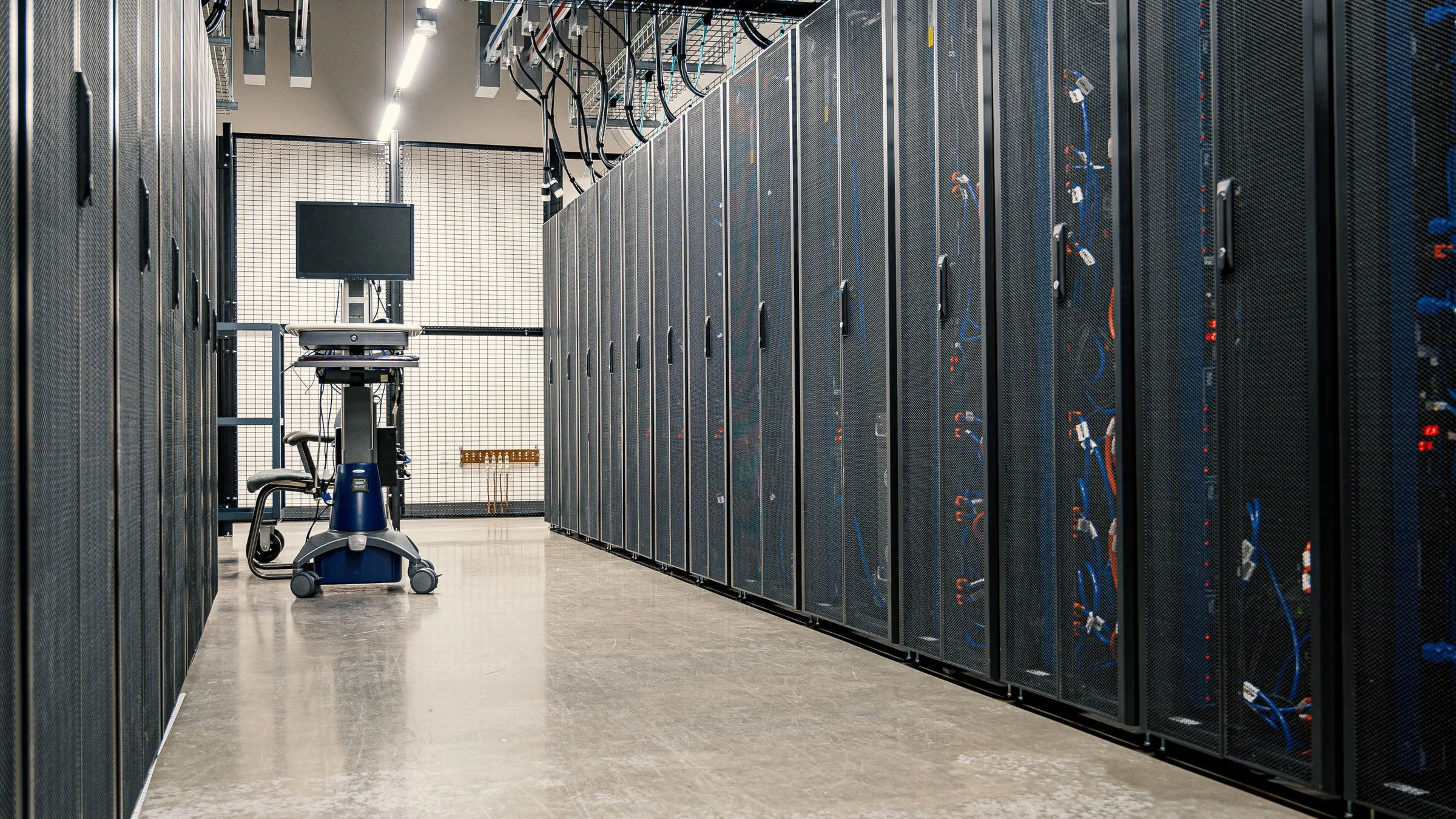
Behind ChatGPT, Claude, Gemini, Copilot, image models, code agents, and enterprise AI tools sits a physical layer: data centers, power lines, cooling systems, backup generation, land, water, and grid upgrades. The part that bothers me is not that this infrastructure exists. Useful technology always has a physical cost. The part worth questioning is who ends up paying when that cost moves from a private AI product into a public utility system.
The International Energy Agency’s Energy and AI work frames the issue plainly: data-center electricity demand is growing fast, and AI is one of the demand drivers. Lawrence Berkeley National Laboratory’s 2024 U.S. data-center energy report puts hard numbers under the U.S. side of the story. EPRI’s Powering Intelligence report gives utilities a planning lens. Consumer Reports has already moved the subject closer to households by asking what data centers can mean for electric bills, water, and local communities.
So I do not read this as a culture-war story about whether AI is good or bad. I read it as an allocation story. The benefit of AI may be private, but the infrastructure cost can leak into public systems. That is where the argument becomes real.
The working question I would use
If I were reviewing this inside a company or a policy team, I would not start with “AI uses too much electricity.” That line is easy to say and hard to act on.
I would start with five questions.
| Question | Why it matters | What I would ask for |
|---|---|---|
| Is the new load truly incremental? | Some data-center demand replaces older compute, but much of AI training and inference appears additive. | Projected MW load, ramp schedule, and whether the load is new or migrated. |
| Who pays for grid upgrades? | Transmission, substations, capacity markets, and generation contracts can be recovered through utility rates. | Cost-recovery plan and whether residential or general commercial customers share the burden. |
| Is power use matched by local benefit? | A data center may create tax revenue and construction jobs, but not always broad employment. | Jobs, tax abatements, water use, and local rate impact in the same memo. |
| Does the AI workload justify the compute? | Some AI use is productive. Some is wasteful prompt-churn dressed up as innovation. | Business value per workflow, not only token volume or model calls. |
| Is demand flexible? | A flexible batch workload can shift to low-stress hours; real-time inference is harder. | Which jobs can defer, throttle, or move regions during grid stress. |
That table is not anti-AI. It is basic project hygiene. If a company wants large AI capacity, it should be ready to explain why that capacity is worth the physical cost.
How the bill can move without saying “AI fee”
The part many readers miss is that the cost does not need to appear as a separate line called “AI data center surcharge.” It can move through the system in quieter ways.
| Cost path | What happens in plain language | Why customers should care |
|---|---|---|
| New generation | Utilities or suppliers secure more power because demand forecasts rise. | Long-term contracts can affect rates even if a household never uses AI. |
| Transmission upgrades | Lines and substations are expanded to serve concentrated load. | Grid work is expensive and often recovered across a broad customer base. |
| Capacity payments | Markets pay resources to be available during peak demand. | A data center that raises peak risk can make standby capacity more valuable. |
| Water and cooling | Some facilities need significant cooling support, depending on design and climate. | Local water pressure is not just a technical footnote in dry regions. |
| Land and tax incentives | Cities may trade tax breaks for development promises. | The public should compare incentive value against lasting local benefit. |
| Backup power | Diesel, gas, or battery backup keeps uptime promises. | Resilience for a private facility can still affect local planning and emissions. |
| Delayed grid capacity | Large projects can take interconnection capacity before other uses. | Housing, factories, EV charging, and public facilities may face delays. |
| Retail energy contracts | AI firms may buy renewable power or sign special agreements. | Good contracts help, but they do not erase local grid constraints by themselves. |
This is why the “AI electricity bill” headline is messy. The consumer may not see a clean causal chain. A utility filing, a capacity auction, a rate case, or a local tax package can carry the effect.
My operating call: AI companies should not get a free infrastructure pass
I use AI heavily, and I do not buy the lazy version of this debate. AI is not just frivolous image generation and chatbot gimmicks. It can reduce analysis time, help with accessibility, accelerate code work, support medical research, improve customer support, and make lean teams more capable.
But serious tools deserve serious accounting. If an AI company builds a product on extremely power-hungry infrastructure, the cost should be visible somewhere. It should show up in product pricing, enterprise contracts, power-purchase agreements, local impact reports, or clear utility arrangements. What should not happen is a quiet shift where the upside is captured privately and the grid cost is blurred into everyone else’s bill.
There is also a product-management lesson here. Cheap AI usage can make teams careless. If every internal process starts calling a frontier model for work that a lighter model, cached result, search index, or rule-based workflow could handle, the company is not “AI-first.” It is just hiding waste behind someone else’s infrastructure.
A practical test for AI teams
For a normal team deciding how much AI to use, the useful question is not “Does this model work?” It is “Does this AI call deserve expensive compute?”
My failure signal is simple: if a workflow cannot explain the business value of a heavy model call, I would not choose a frontier model as the default. Reserve expensive compute for judgment, risk, synthesis, or work where a wrong answer creates real rework.
| Workflow | Heavy model justified? | Better operating rule |
|---|---|---|
| Legal-risk summary for a contract | Often yes | Use a strong model, source the clauses, and require human review. |
| Rewriting a routine internal notice | Usually no | Use a lighter model or template unless judgment is needed. |
| Coding a difficult debugging path | Often yes | Pay for stronger reasoning when failure costs hours. |
| Reformatting spreadsheet rows | Usually no | Use deterministic scripts, validation, or a cheap model with strict checks. |
| Customer-support triage | Sometimes | Use routing first, stronger model only for ambiguous or high-value cases. |
| Large research synthesis | Often yes | Batch it, cache outputs, and preserve source links. |
| Meeting-note cleanup | Sometimes | Use lightweight summarization, then escalate only for decisions and risks. |
| Image ideation | Sometimes | Generate fewer candidates and reject fake text, logos, and bad crops. |
| Daily status reports | Usually no | Pull from systems of record; AI should not invent operational truth. |
| Personal curiosity prompts | Fine personally | Do not let casual usage become invisible enterprise cost. |
That distinction matters because energy demand is not only a national policy issue. It also appears as cloud bills, latency decisions, procurement reviews, model-routing rules, and internal governance. The team that treats every AI request as equally important will pay twice: once in product cost, and again in operating confusion.
What local governments and utilities should disclose
For a data-center project, I would want a public memo with the following items in one place.
| Disclosure item | Why I would want it public |
|---|---|
| Expected power load by year | A single headline MW number hides the ramp curve. |
| Peak-demand impact | Average usage is less important than strain during hard hours. |
| Grid upgrade responsibility | Residents should know which costs are private and which become rate base. |
| Water-use estimate | Cooling design is part of the public impact, not a side note. |
| Tax incentive value | A subsidy should be compared with durable local benefit. |
| Job count after construction | Construction work and permanent work are different. |
| Demand flexibility | The public should know whether load can throttle during grid stress. |
| Clean-power contract details | Renewable claims should be tied to actual matching, location, and timing. |
| Emergency backup plan | Backup emissions and fuel logistics matter locally. |
| Review cadence | A 10-year infrastructure bet should not rely on one approval meeting. |
That may sound boring. It is also the difference between a real infrastructure decision and a press release.
The part I would watch next
The next argument will not be only about electricity volume. It will be about priority.
If a city has limited grid capacity, who gets served first: an AI data center, a housing project, a factory, a hospital expansion, public transit electrification, or EV charging? There is no purely technical answer. It becomes an economic and political choice.
My bias is simple. AI infrastructure can be worth building, but it should earn its place in the queue. If the facility brings real investment, transparent cost responsibility, flexible demand, and a credible power plan, the conversation is different. If it arrives with tax breaks, vague jobs language, large grid needs, and a promise that the benefits will eventually trickle out, I would be skeptical.
Checklist before accepting an AI electricity argument
- Ask whether the cited number refers to global demand, U.S. demand, one region, one utility, or one facility.
- Separate training demand from everyday inference demand. They stress the system differently.
- Look for the rate case, interconnection filing, or utility plan. Press releases are not enough.
- Check whether residential customers, general commercial customers, or only the data-center operator carry the upgrade cost.
- Ask what happens during peak demand, not only yearly average consumption.
- Look for water use, backup power, tax incentives, and permanent job counts together.
- Treat renewable-power claims carefully. Annual matching is weaker than local hourly matching.
- Inside a company, route AI work by value: expensive models for high-risk judgment, lighter tools for routine formatting.
The AI boom is not free. That does not make it bad. It means the bill has to be visible, and the people receiving the benefit should not be allowed to pretend the infrastructure is someone else’s problem.
Sources checked
- International Energy Agency, Energy and AI: Energy demand from AI
- Lawrence Berkeley National Laboratory, 2024 United States Data Center Energy Usage Report
- EPRI, Powering Intelligence
- Consumer Reports, AI Data Centers: How They Impact Electric Bills, Water, and More
- The Brief Signal, AI’s Electric Bill Is Coming For Everyone
Workflow path
Where this guide fits
Use this section to connect the guide you are reading with the broader workflow it supports.
A path for energy demand, model access, export controls, and the infrastructure decisions that shape how AI systems reach real users.
Open workflow path- Best fit
- readers who need to understand the business and policy costs behind AI adoption, not only the model features
- Not ideal if
- You need step-by-step setup instructions more than a decision framework.
Sources checked
Main public pages used to check reported facts, official documentation, policy background, product details, and claims that may change.
- Energy and AI: Energy demand from AI International Energy Agency
- 2024 United States Data Center Energy Usage Report Lawrence Berkeley National Laboratory
- Powering Intelligence EPRI
- AI Data Centers: How They Impact Electric Bills, Water, and More Consumer Reports
- AI's Electric Bill Is Coming For Everyone The Brief Signal
- Pexels photo 4508751 Pexels / Brett Sayles